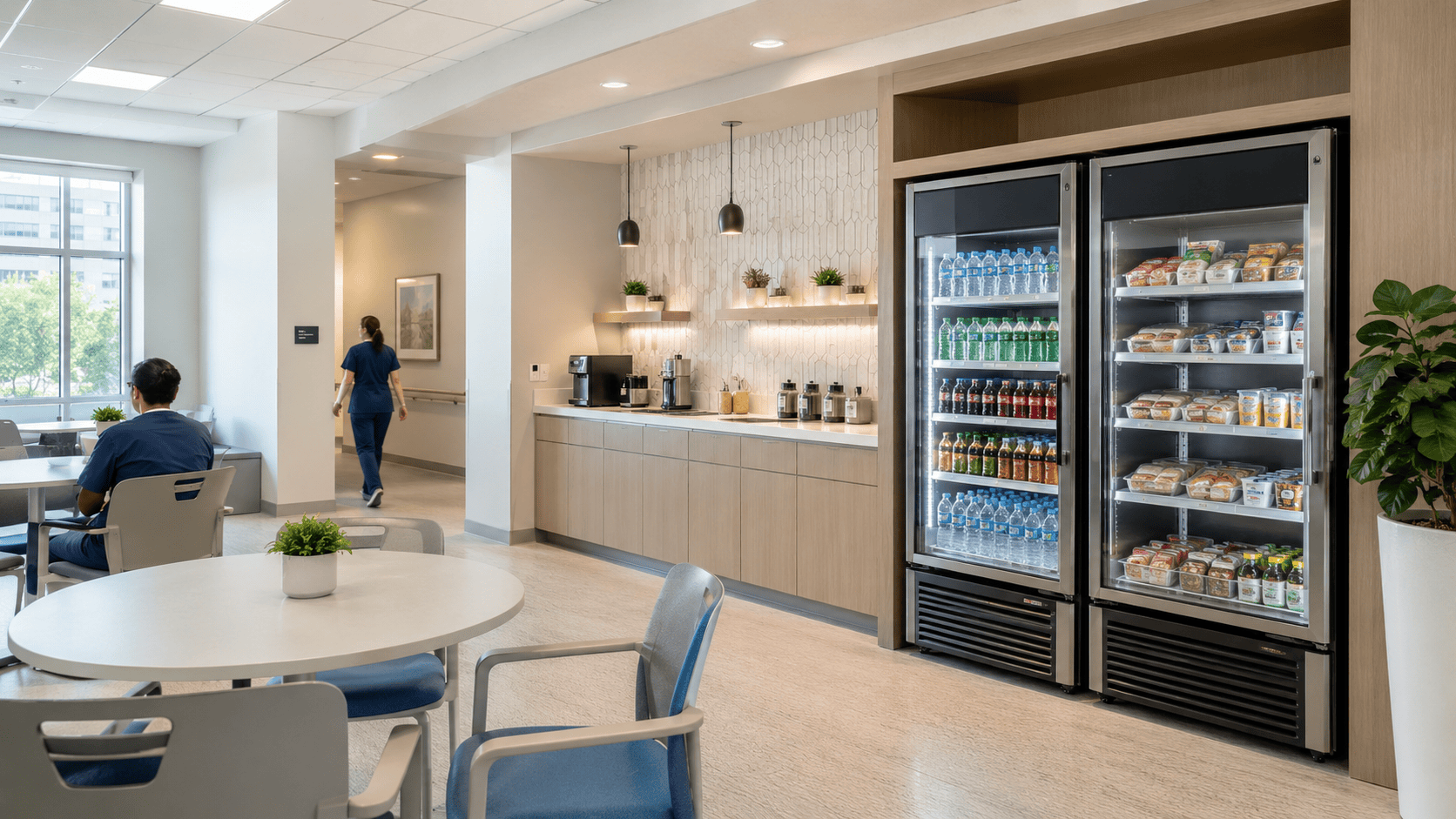
Healthcare workers cannot leave the floor. A nurse with two patients in active triage cannot walk down the street for a sandwich. A medical assistant turning over exam rooms cannot run to Starbucks. An urgent care physician with a packed waiting room cannot step out for coffee.
That reality changes everything about what a healthcare break room needs to do. For Southwest Florida medical offices, urgent cares, and outpatient clinics, the break room is often the only food and drink option staff have during a shift.
The healthcare workforce reality
Healthcare workers are burning out at unprecedented rates. A 2025 Joyce University survey of 1,000 registered nurses found that 74% feel emotionally exhausted multiple times a week. Missed meals and skipped breaks are part of the daily reality.
The break room will not solve burnout on its own. But research shows that more than a third of U.S. nurses rarely or never take breaks during their shifts, and when they do take a moment, the food and drink on hand shapes what they consume. A break room stocked with stale chips and 12-hour-old coffee sends staff back to work hungry. A break room stocked with real food keeps them functional.
What healthcare break rooms need to do differently
Four things separate healthcare break rooms from a typical office setup:
Around-the-clock access. Urgent cares, dialysis centers, and surgery centers run extended hours. Many SWFL urgent cares operate seven days a week with shifts from 7 AM to 9 PM. A program that only restocks during business hours leaves the back half of the day empty.
Grab-and-go is the default. A nurse or MA in the middle of a shift has 5 to 10 minutes, not 30. Pre-made sandwiches, salads, wraps, fresh fruit, and hard-boiled eggs work. Anything that requires preparation does not.
Healthier options actually move. Clinical staff read nutrition labels. They notice when the only options are candy bars. Healthy, refrigerated, and fresh options sell faster in healthcare than in almost any other vertical.
Hydration is a job requirement. Staff who spend 10 hours on their feet, often in PPE, need water and electrolyte beverages within arm’s reach. Stock unsweetened iced teas, sparkling water, electrolyte drinks, and coconut water alongside bottled water.
The waiting room is a separate problem
Healthcare facilities have a second audience most other businesses do not: patients and visitors.
People waiting for appointments, family members accompanying them, and patients stuck in urgent care lobbies during a busy afternoon all spend real time in your facility. A waiting room with no refreshment options, or worse, a broken vending machine, shapes the patient experience as much as the wait time itself.
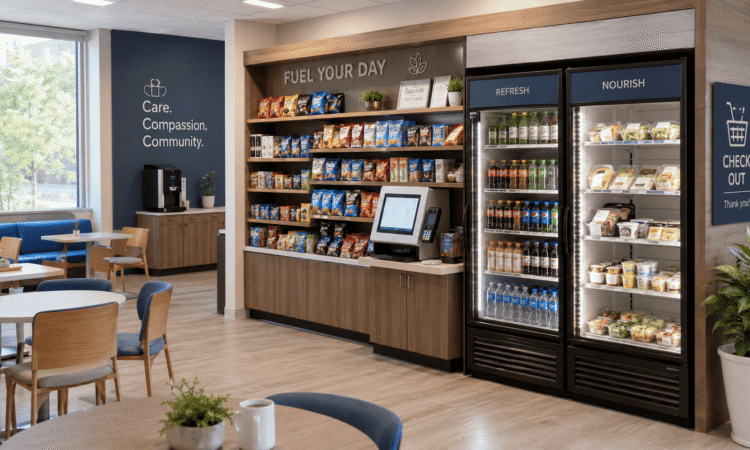
A smart store or compact micro market in a waiting area solves the problem without requiring staff to manage transactions. Patients grab a bottle of water, a snack, or a coffee without disrupting front desk operations.
What works in SWFL healthcare settings
The right format depends on facility size and traffic:
Small medical offices and single-physician practices. A traditional vending machine for staff plus a basic office coffee setup is often enough. A subsidized office pantry for free coffee and water sends the right signal.
Multi-provider clinics, urgent cares, and outpatient facilities. A smart cooler or compact micro market for staff handles the breadth of options needed, including refrigerated fresh items. Add a separate vending machine or smart cooler in the patient waiting area.
Surgery centers, dialysis centers, and larger outpatient hubs. Full micro markets or smart stores for staff give clinicians variety across long shifts. Separate patient-facing refreshment keeps front desk staff focused on intake and discharge.
A real office coffee program belongs in every setting. Healthcare runs on coffee. A bean-to-cup brewer producing fresh coffee on demand outperforms a drip pot, especially during night shifts.
Better break rooms, better care
A well-stocked break room will not fix the healthcare staffing crisis on its own, but it can take one source of friction off the table. When clinical staff have real food and clean water within reach during a 12-hour shift, they make it through the day with more in the tank for patients.
Surpass Refreshments serves medical offices, urgent cares, dental practices, and outpatient clinics across Naples, Fort Myers, and Southwest Florida with refreshment programs built around clinical workflows.
Get started today and find out what a healthcare-ready break room can do for your staff and your patients.